
Understanding Lower Back Tightness: It’s All in the Legs
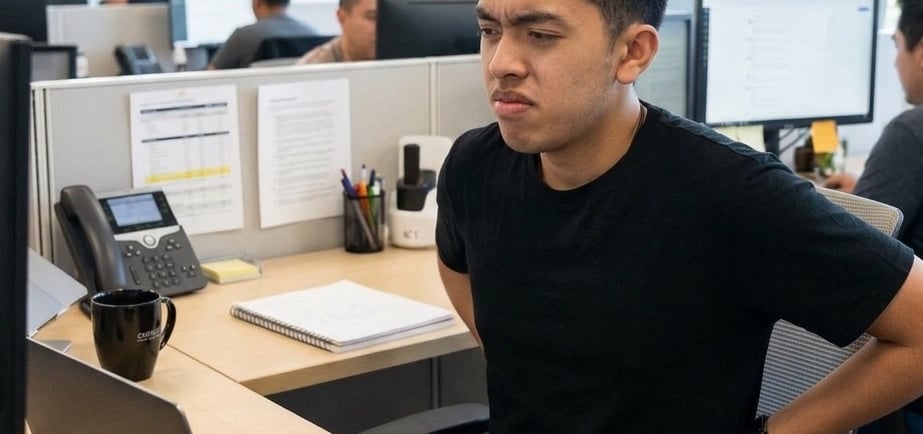
Many people assume that if their lower back hurts, the problem must be in the back itself. However, the true culprit is often found further down. If you spend long hours sitting at a desk, in a car, or on the couch, your legs may actually be the primary cause of your discomfort.
5/26/20261 min read
The Sitting Chain Reaction
When you sit for extended periods, your body adapts to that seated position in ways that directly impact your spine:
• Tight Hip Flexors: The muscles at the front of your hips (psoas) remain in a shortened position while sitting. Over time, they tighten and begin to pull on the front of your lumbar spine, creating a constant tug-of-war that leads to lower back aches.
• Hamstring Tension: Sitting often keeps the knees bent and the hamstrings restricted. Since the hamstrings attach to the pelvis, tightness here can pull your pelvis out of alignment, flattening the natural curve of your lower back.
• Glute Inactivity: Long hours of sitting can lead to "gluteal amnesia," where the buttock muscles stop firing efficiently. When the glutes aren't doing their job to support your frame, the lower back muscles have to overwork to compensate.
Simple Ways to Find Relief
Breaking the cycle of tightness doesn't require hours of exercise; it’s about consistent movement:
1. The 30-Minute Reset: Try to stand up and move for at least two minutes for every half hour spent sitting.
2. Focus on the Hips: Incorporate gentle lunges or "pigeon pose" stretches to open up the front of the hips.
3. Hydrate the Fascia: Staying hydrated helps keep the connective tissues in your legs and back supple, making them less prone to "locking up" during a long workday.
Note: While muscle tightness is a common cause of discomfort, persistent or sharp pain should always be evaluated by a healthcare professional to rule out underlying conditions.